Engineered for thermal endurance, chemical non-reactivity, and bespoke aesthetic presentation in fine-dining and retail channels.
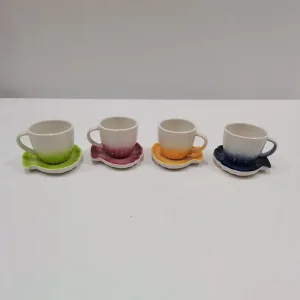
OEM Colorful Glazed Ceramic Mugs - Charming Drinkware Collection Company, Products
View Details →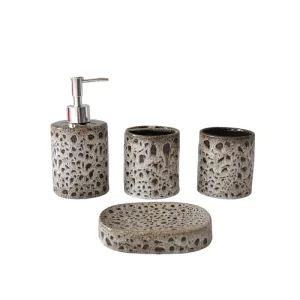
ODM Lava Inspired Speckled Porous Earthy Tone Stoneware Bathroom Set Exporter, Exporters
View Details →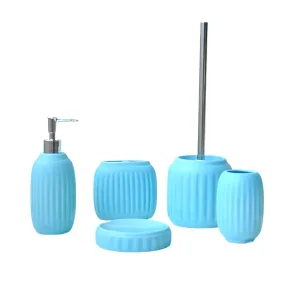
Cheap Sky - Blue Vertical - Ribbed Stoneware Bathroom 5 - Piece Set Manufacturers, Exporter
View Details →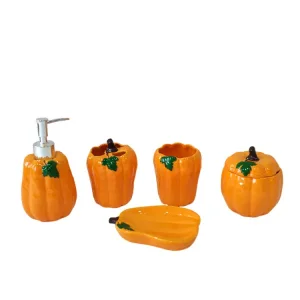
Custom Orange Pumpkin - Shaped Stoneware Bathroom 5 - Piece Set Manufacturer, Factory
View Details →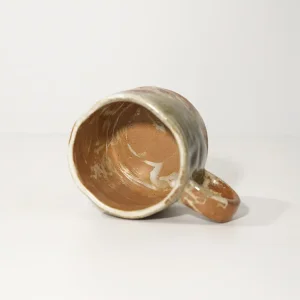
jiashun Creative Stoneware Coffee Cup with Saucer for Latte Cappuccino Tea Supplier, Suppliers
View Details →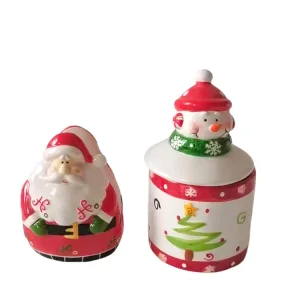
ODM Christmas - Themed Dolomite Set: Santa - Shaped Towel Rail & Snowman - Tree Sugar Jar Companies, Product
View Details →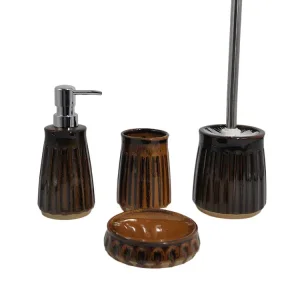
China Dark Brown Ribbed Glaze Ceramic Bathroom 4-Piece Set Factories, Products
View Details →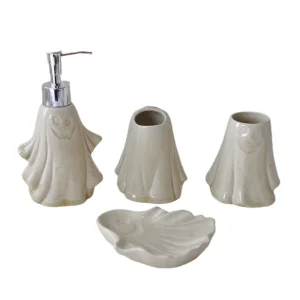
Custom Halloween Ghost - Shaped Ceramic 4 - Piece Bathroom Accessory Set Exporters, Company
View Details →For procurement officers and corporate buyers, choosing the right manufacturer involves looking past the surface glaze and examining the core mineral formulation.
Stoneware occupies a critical position in high-frequency hospitality and premium homeware retail. Unlike earthenware, which is fired at lower temperatures and retains a highly porous body, high-quality stoneware is formulated from specific non-refractory fire clays, ball clays, and quartz minerals. It is fired to temperatures ranging between 1,200°C and 1,280°C (2,192°F to 2,336°F). At this intensity, the silica components within the clay slip melt and flow, filling the interstitial spaces between clay platelets—a chemical process known as vitrification.
The resulting vitrified body features a liquid absorption index of less than 1.0%, rendering the stoneware plate naturally impermeable to moisture, bacteria, and staining. This makes it highly sanitizable and structurally resilient. For global buyers operating under strict food contact regulations, high-temperature vitrification guarantees that the body of the plate remains inert, preventing moisture entrapment that could cause structural fractures when subjected to commercial microwave ovens or localized heat cycles.
Formulated with premium kaolin and ball clay blends. Under high-temperature reduction firing, these clays crystallize into a needle-like mullite structure that dissipates mechanical stress, significantly reducing edge chipping.
Engineered with a low coefficient of thermal expansion (α ≤ 5.5 × 10^-6 K^-1). Our stoneware plates comfortably endure rapid thermal fluctuations of up to 180°C (356°F) without surface crazing or body stress fractures.
Fully vitrified structures with raw water porosity ratings near zero. The body does not absorb organic greases, liquid detergents, or bacterial cultures, satisfying the strictest requirements of commercial sanitary inspections.

Fujian Jiashun Arts & Crafts Corp., Ltd. is situated in Dehua County, Fujian Province—globally celebrated as the "World Ceramic Capital". Since our establishment on January 17, 2005, we have combined local raw material resources with modern automation to supply high-quality stoneware dinnerware to global hospitality distributors, department stores, and boutique brands.
Our facility spans advanced offices, standardized production complexes, a multi-functional product experience center, and dynamic show floors. We currently maintain 2 modern daily ceramic and arts & crafts porcelain production lines alongside 2 modern intelligent electric control rotary kilns. Our firing schedules are regulated by digital PLCs to ensure uniform heat distribution, reducing deformation and dimensional discrepancies in our plates.
To streamline scaling, we operate 2 automatic slip-casting and automatic grouting lines. This combination of precision engineering and human craftsmanship allows us to maintain tight tolerances and reliable delivery schedules for large commercial projects.
By enforcing structured 8S management methodologies, Jiashun ensures that clean workflows, waste reduction, and hazard controls are maintained daily. Our processes are certified under ISO9001 and ISO14001, confirming our commitment to both consistent product quality and environmental responsibility.
Empirical engineering data outlining chemical inertness, structural integrity, and thermal ratings for B2B procurement evaluation.
| Evaluation Parameter | Technical Standard / Metric | Testing Protocol / Compliance Status | Procurement Significance |
|---|---|---|---|
| Firing Temperature | 1220°C - 1260°C (Cone 6 to Cone 8) | Digital Rotary Kiln Pyrometer Control | Guarantees vitrification and mechanical strength. |
| Water Absorption Rate | ≤ 0.5% (Vitrified Class A Stoneware) | ASTM C373 Water Porosity Test | Prevents water absorption, staining, and bacteria accumulation. |
| Thermal Shock Tolerance | ΔT = 180°C (No fractures or structural failure) | EN 1183 Standard Test Method | Allows safe movement between low-temp storage and ovens. |
| Lead & Cadmium Migration | Non-Detectable (ND) | US FDA CPG 7117.07 / California Prop 65 | Ensures food safety compliance for premium markets. |
| Mechanical Edge Chipping | High resistance under impact load (>0.12 Joules) | ASTM C368 Impact Test | Reduces replacement rates in commercial foodservice settings. |
| Chemical / Acid Resistance | Grade UA (Unaffected by industrial cleaners) | ISO 10545-13 Chemical Durability | Maintains glaze glossiness despite commercial detergents. |
We turn custom design files into physical dinnerware using precise color matching, material engineering, and tailored mold fabrication.
For modern retail brands and hospitality chains, unique aesthetic identity is a key differentiator. We specialize in producing reactive glazes—a finish where metallic oxides (such as copper, iron, titanium, and cobalt) within the glaze slip undergo complex crystallization during the cooling phase of firing. This process creates distinct variations in color, speckling, and texture, giving mass-produced stoneware plates an organic, handcrafted look.
Our engineering and design teams work closely with buyers to manage every stage of development:
Produces varied color patterns and textures on the stoneware surface. Perfect for brands seeking a handmade, artistic, or rustic appearance.
Designed to reduce glare under restaurant lighting. Formulated to resist cutlery scratching and metal marking during high-volume commercial use.
We incorporate tactile ribs, flutes, and geometric details directly into our casting molds, ensuring crisp, durable patterns after glazing.
Global brands expect robust social responsibility, reliable supply chains, and documented environmental standards.
In 2016, Fujian Jiashun received the Third Prize of the Science and Technology Award for our development of "Waste black tile recycling and high-grade daily porcelain production technology". This process incorporates upcycled pre-consumer ceramic waste back into our raw stoneware clay formulations, reducing quarry mining and supporting waste-reduction goals.
Our modern, electronically controlled rotary kilns feature advanced heat recovery systems. By routing hot exhaust gases to dry wet greenware, we reduce energy consumption, lower greenhouse gas emissions, and improve production efficiency.
We maintain clean, safe, and fair working environments that comply with BSCI and SEDEX guidelines. This comprehensive operational transparency protects our clients' brands and guarantees ethical production practices.
As hospitality design and consumer preferences evolve, commercial buyers prioritize several key design and structural trends.
Hotels and restaurants are shifting away from stark white porcelain in favor of warm, organic-looking stoneware. Multi-tone, hand-sprayed finishes offer a unique, craft-like aesthetic that complements modern dining concepts.
Commercial dinnerware must stack securely. We design our plates with precision-ground, unglazed foot rings and low-profile rims, maximizing storage efficiency and reducing chipping during transport.
Global retailers favor partners with documented carbon reductions, waste recycling initiatives, and ISO certifications. Sustainable sourcing is increasingly becoming a standard purchasing requirement.

Answers to common technical, logistics, and quality assurance questions from corporate buyers.
Stoneware is formulated from mineral-dense fire clays and fired to a vitrified state (typically 1200°C-1280°C). It yields a thick, opaque body with high mechanical strength and natural color variations. Porcelain is made from highly refined kaolin and fired at higher temperatures (up to 1400°C), producing a thin, white, and translucent body. Stoneware is favored for its organic, rustic appearance and robust chip resistance.
We formulate our glazes with refined, lead-free raw materials and verify them through laboratory analysis. Our high-temperature vitrification process locks in metal elements within the glaze structure. We regularly test our products to ensure compliance with US FDA CPG 7117.07, California Proposition 65, and European LFGB standards.
Our typical production schedule starts with CAD file setup and 3D prototyping (7-10 days), followed by plaster mold development and color testing (10-15 days). Once the pre-production sample is approved, bulk production requires 35-45 days, depending on order size and complexity. This timeline ensures strict quality control at every stage.
We emphasize waste reduction and clean energy across our operations. We recycle raw production clay and pre-consumer tiles to decrease quarry waste, a process recognized with a Fujian provincial Science and Technology Award. Additionally, our kilns recover waste heat to dry clay, and our water filtration systems recycle manufacturing water to minimize consumption.
We package stoneware plates for heavy-duty transit. Cartons are constructed from high-density, five-layer corrugated fiberboard. Each plate is separated by protective inserts, and the boxes are loaded onto heat-treated, fumigated pallets wrapped in protective plastic. This packaging meets ISTA-1A drop-test criteria to minimize breakages during shipping.
Our factory is located in Dehua County, Fujian Province, China. We are positioned near major export ports like Xiamen Port. This location offers convenient access to global shipping lanes, allowing us to manage sea freight logistics efficiently and maintain reliable delivery timelines to major ports worldwide.
Discover our comprehensive range of custom stoneware, kitchenware, and specialty serving sets designed for global retail and commercial markets.
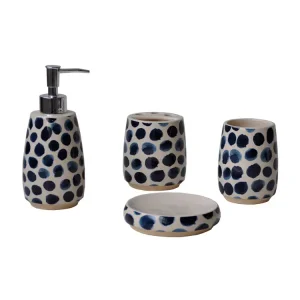
Cheap Artistic Hand - Painted Blue - White Polka Dot Ceramic Bathroom Accessory Set Company, Companies
View Details →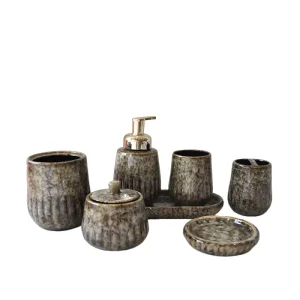
jiashun Wabi-Sabi Dark Brown Kiln-Changed Vertical Striped Stoneware Bathroom Accessory Set Factory, Company
View Details →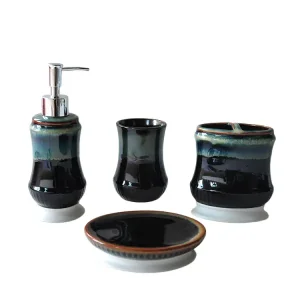
ODM Kiln-Change Glaze Blue-Green Gradient Ceramic Bathroom 4-Piece Set Companies, Products
View Details →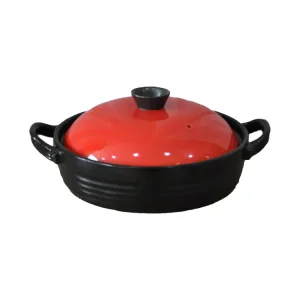
Wholesale Red Black Contrast Shiny Lid Ceramic Casserole Manufacturers, Exporter
View Details →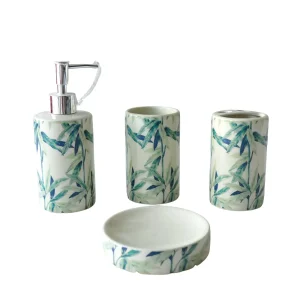
ODM Fresh Blue Green Bamboo Leaf Printed Ceramic Bathroom Set Supplier, Product
View Details →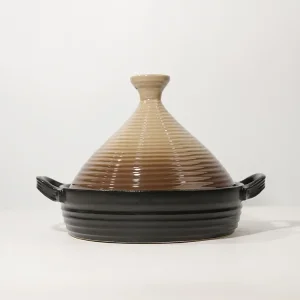
Custom Manufacturer Direct Wholesale Hige Temperature Ceramic Taji Cooking Pot Heat - Resistant Clay Cookware Casserole with Lid for Kitchen Manufacturers, Products
View Details →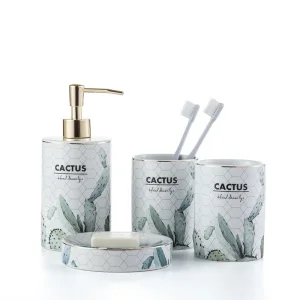
jiashun Ins-Style Cactus Pattern Ceramic Bathroom 4-Piece Set Factory, Company
View Details →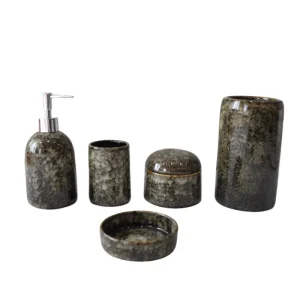
Wholesale Wabi - Sabi Dark Brown Kiln Fired Speckled Stoneware Bathroom Set Exporter, Companies
View Details → JIASHUN